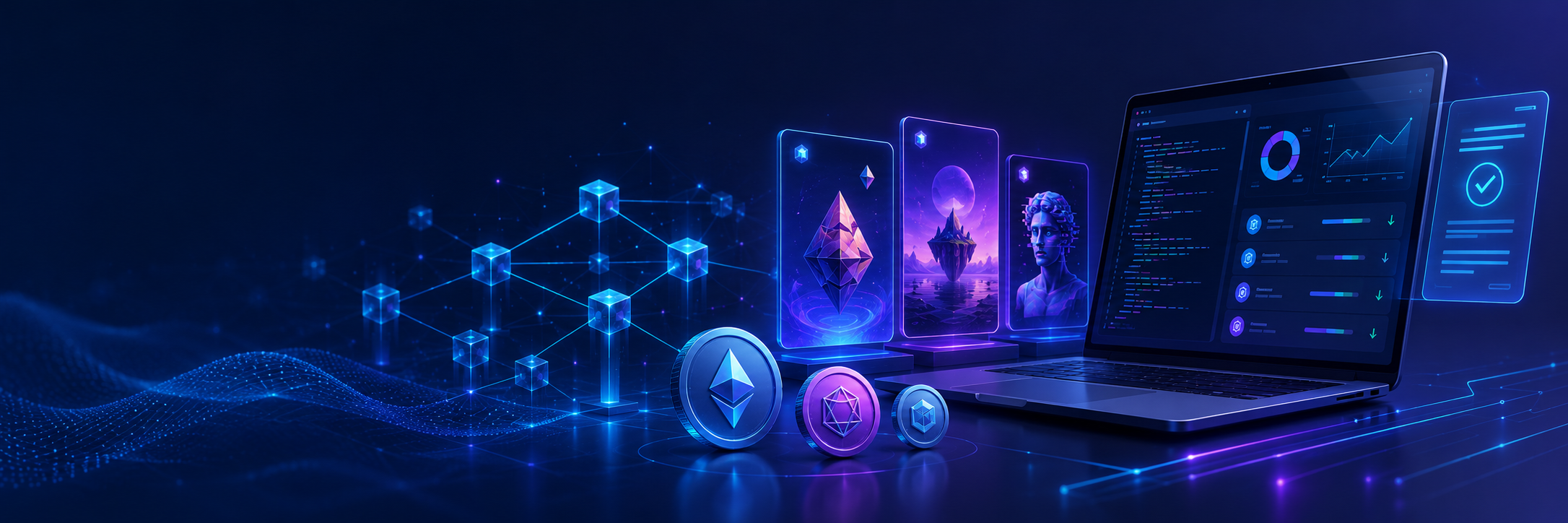
Blockchain technology is a modern digital infrastructure that allows data to be stored securely, transparently, and immutably without depending on a central authority. With this structure, next-generation solutions can be developed in many areas such as finance, digital assets, membership systems, gaming, art, certification, supply chain, and various other sectors.
Blockchain systems should not be considered only as cryptocurrency trading platforms. The main value of blockchain lies in keeping records on a distributed network and verifying transactions securely. This makes it possible to manage digital ownership, transaction history, token transfers, smart contracts, and user activities on a more reliable foundation.
NFT, or Non-Fungible Token, is a special type of token that represents the uniqueness and ownership of a digital asset. Artworks, collectibles, membership cards, in-game assets, certificates, special access rights, or brand projects can be digitally represented through NFT infrastructure. In NFT projects, smart contract structure, metadata organization, security, and user experience are just as important as visual design.
ERC20 tokens are one of the most widely used standard token structures in Ethereum-based projects. An ERC20 token can be designed for different purposes such as in-platform payments, membership, loyalty points, digital assets, platform usage rights, or a private community economy. While creating a token structure, details such as total supply, transfer rules, burn mechanism, locking, authorization, and security should be carefully planned.
The most critical point in blockchain projects is proper analysis and a solid infrastructure. Simply creating a token is often not enough. The purpose of the project, user flow, web panel, wallet connection, smart contract structure, management screens, and when necessary, payment or membership integrations should be evaluated together.
In projects developed in this field, Solidity, Web3.js, Ethers.js, PHP, MySQL, JavaScript, and modern web technologies can be used together. Through web-based panels, sections such as user management, token transactions, NFT listing, minting processes, wallet connection, and reporting can be prepared.
When planned correctly, Blockchain, NFT, and ERC20 token projects become not only technical products, but also tools for creating digital communities, brand value, and next-generation business models. Instead of ready-made and superficial solutions, custom infrastructures designed according to the needs of the project provide a more secure, manageable, and scalable structure in the long term.